Why Kids Should be Talking in Class
There has been a great deal of concern expressed recently about the declining ability of students to read and write effectively. Numerous college professors and educational policy experts have raised the warning flags that American students cannot perform even some of the most basic literary tasks.
While this is troublesome, recent research into contemporary classrooms shows something even more concerning: in most American classrooms, students only speak 10% of the class period. The other 90% is taken up by lectures, videos, online instructions, and worksheets. That means that if the average classroom has 25 students, and students only speak 10% of the time, the vast majority of students are speaking, at most, only a few words each day in class.
The developmental problem here is obvious. We learn language primarily by hearing and speaking words. We learn how sentences should flow together, how different words have different effects, and how to develop a cohesive thought, by practicing on a daily basis. Our abilities to read and write well are rooted in the primary activity of listening and speaking. When students have to sit silently all day every day throughout the year, they are not learning how language works and how to master it.
We should not be surprised that students struggle to read and write since they hardly even practice how to speak.
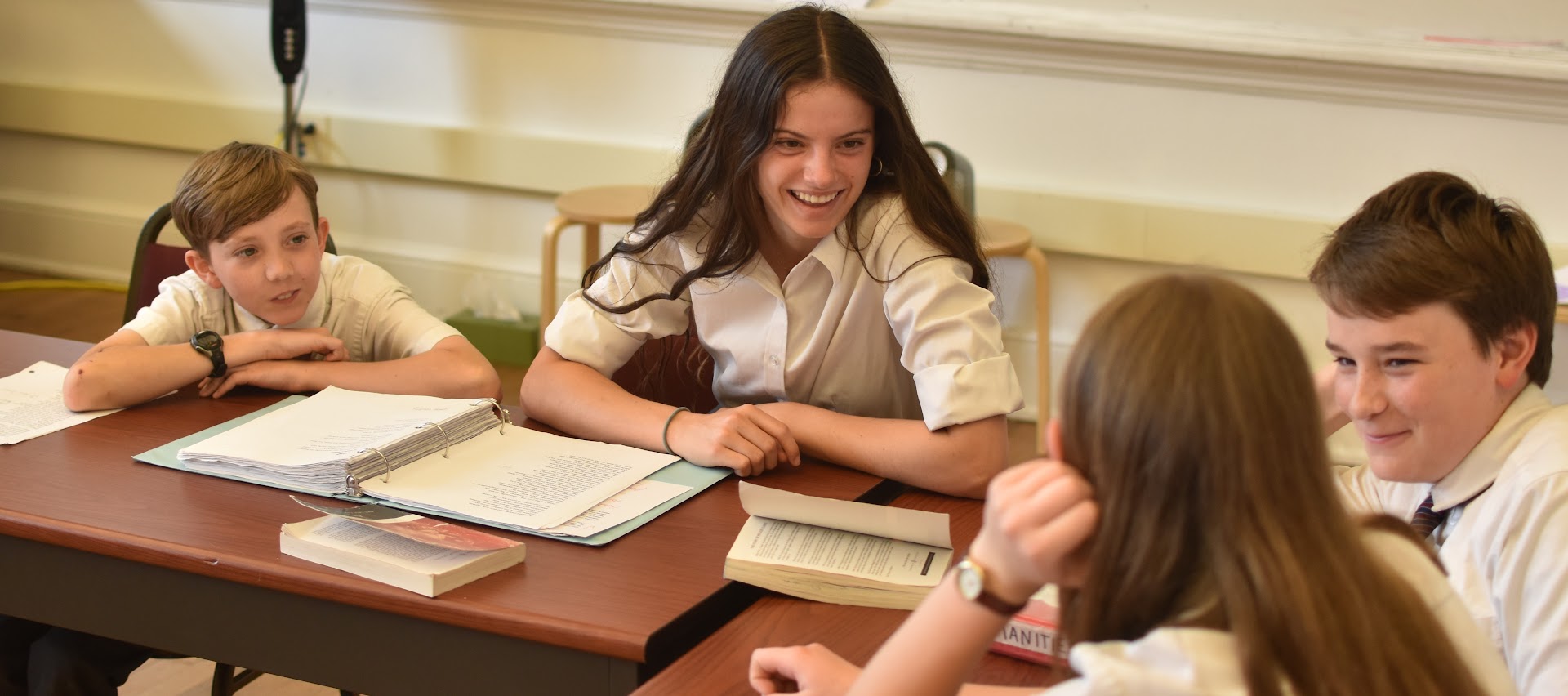
At SJI, our goal is to flip this ratio. We want students to speak 90% of the time and the teacher to speak 10%. We seek this because we know that students learn best when they are meaningfully discussing and engaging with the material at hand. All educational research indicates that students learn best when they must learn how to express what they know. This is the key of our seminar classes at SJI. As our educational plan states:
“This is the secret heart of Seminar at SJI: we eschew merely lecturing at students about what we think, we practice prudent silence, we promote habits of incisive thought, and we guide students in generous collaboration in the hope that they will one day know more than we do. Who sends a child to school to learn the teacher’s opinions? Our students learn how to hear and see for themselves the reality of Creation and all that humans have made of it, a world for which they will soon be responsible.”
Visitors to SJI all comment on the same thing: your students talk so much and are so engaged!
Next time you visit a school, ask that question: how much are the students actually talking?